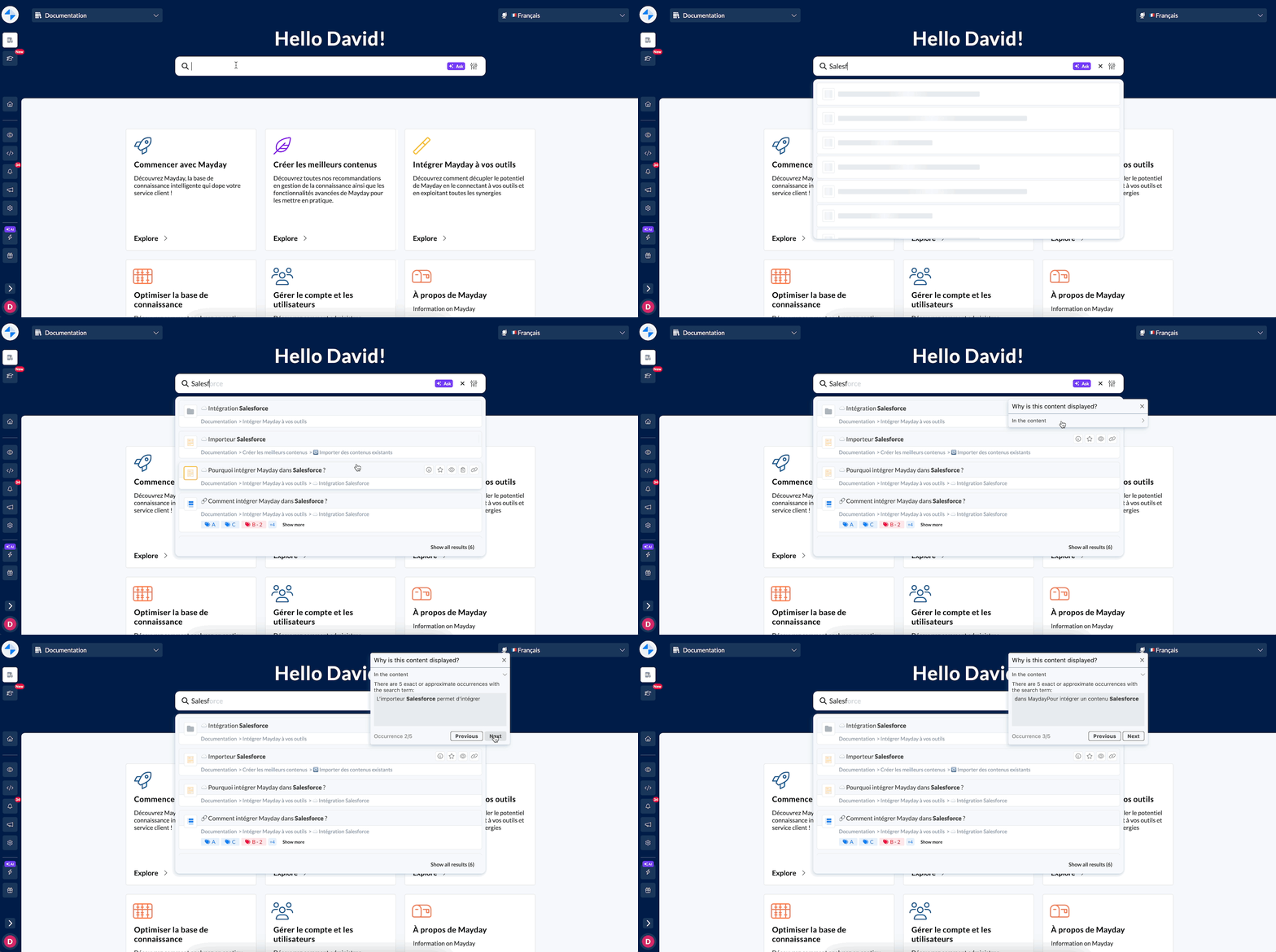
Discover in this content how content referencing works in search engines.
Content search by an advisor is an important step since the ultimate goal of using Mayday is to provide the right information, in other words, to suggest content related to the advisor's operational needs.
To achieve this goal, two pillars are necessary:
Create reliable, complete and understandable content (dependent on the client's internal processes)
Apply search features to facilitate content suggestion (via Mayday features)
Our goal: to offer an "intelligent" search engine that corrects spelling mistakes, filters content, searches for content in a PDF...
🪞 Search Correspondence
When a keyword is entered in the search bar, the query will attempt to find a correspondence in order of priority at the level of:
the content title;
the content alias;
the body of the article/guide/guide step;
the attached file body of the content: PDF, Excel, Powerpoint...
The more an article contains the keyword, the higher it will be positioned in the first results.
The search query is the same regardless of the interface used.
💡 Good to know
In the case where two keywords are entered, one of which is present in the title of a content and the other is present in the body of the content, the search will result in a content suggestion as soon as one of the keywords matches.
⚙ Search Sensitivity Settings
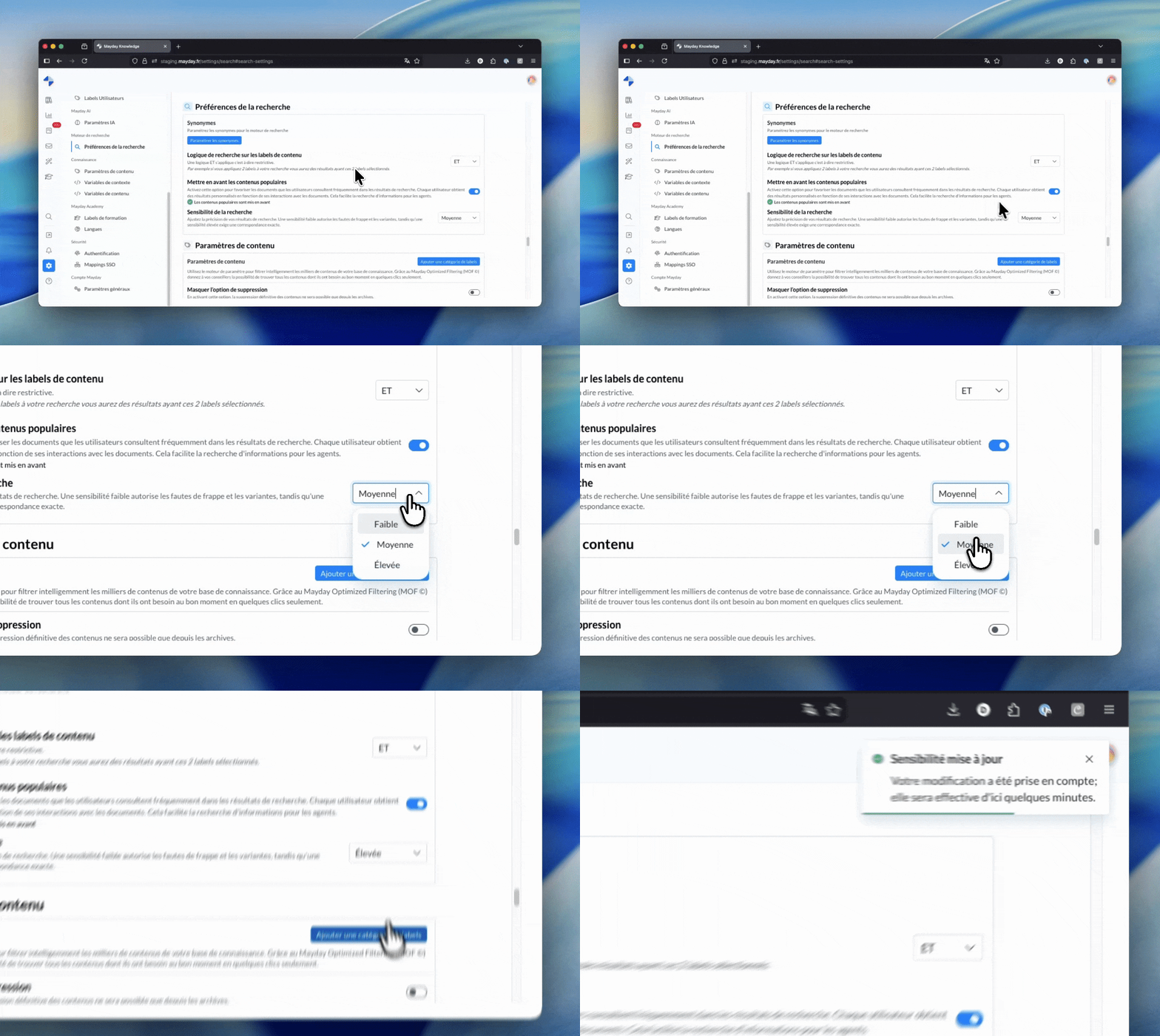
As an administrator, you have the ability to adjust the search engine sensitivity level to fit the specific needs of your knowledge base.
What is search sensitivity?
Search sensitivity allows you to define the balance between flexibility and accuracy in the results. It determines how closely the results must match the searched terms.
Accessing the setting:
Go to Mayday Admin > Settings > Search Preferences to configure this setting at your account level.
The three available levels
Level | Description | When to use it? |
|---|---|---|
🔓 Low | High tolerance for typos and variations. | • Common vocabulary |
⚖ Medium (default) | Balance between tolerance and accuracy. | • General use |
🔒 High | Requires a more exact match. | • Technical terminology |
📌 Search and Typography Specifics
Variable rules
The following behavior varies depending on the search sensitivity level configured in your settings (see section "Configuring search sensitivity"):
Tolerance to spelling mistakes:
The higher the sensitivity is set to "High", the stricter the engine is and requires longer words to allow for approximation, while a "Low" sensitivity is much more permissive even with short terms.
Number of errors allowed | 0 errors allowed | 1 errors allowed | 2 errors allowed |
|---|---|---|---|
🪶 Low Sensitivity | ≤ 8 characters | 9-14 characters | > 14 characters |
⚖ Medium Sensitivity | ≤ 7 characters | 8-12 characters | > 12 characters |
🔒 High Sensitivity | ≤ 3 characters | 4-5 characters | > 5 characters |
Language specificity (e.g. UK English vs US English): the rule that applies is the same as in the “Spelling mistake” section.
Fixed rules (independent of the sensitivity parameter)
These rules always apply, regardless of the sensitivity level configured:
Accents: they are not taken into account, they are considered as non-existent.
Uppercase letters: When a document contains the searched term in uppercase, it is suggested with as much weight as a document containing the same term in lowercase.
Stop words (“the/of/from…” in other words common words/prepositions): they are not taken into account. The same applies to periods or hyphens.
Number of keywords: the match here depends on the number of words entered:
If the query contains 2 to 9 words, only 75% of the words must match to validate the match and for content to be suggested.
Beyond 9 words, all words except 3 must match for content to be suggested.
🧮 Matching Calculation Rule
The search query is based on 3 main criteria:
Application of filters/labels: content suggestion is based on:
compliance with the 2 conditions (AND criterion)
except for content labels where multiple label choices will apply the "OR" or "AND" criterion depending on the logic chosen in your Mayday account settings
Typology rules that must be applied (see previous paragraph)
Score calculation (display order)
is not currently based on the frequency of content consultation
is based only on a mathematical analysis relative to the match between the content text and the search:
alias = 4
body = 1
reference = 4
tags = 2
parameters.* = 2
external_id = 2
pdf contents = 1
🔍 Results Display
Results are not limited in terms of numbers and the advisor can click on "show more" to view all suggested content based on their query

If you want more information on why a result was considered relevant, you can use the ℹ button on each result to have an explanation.
When you use the search, you will find the keywords of the query in bold in the results, as well as in the contents if you open them from the search.